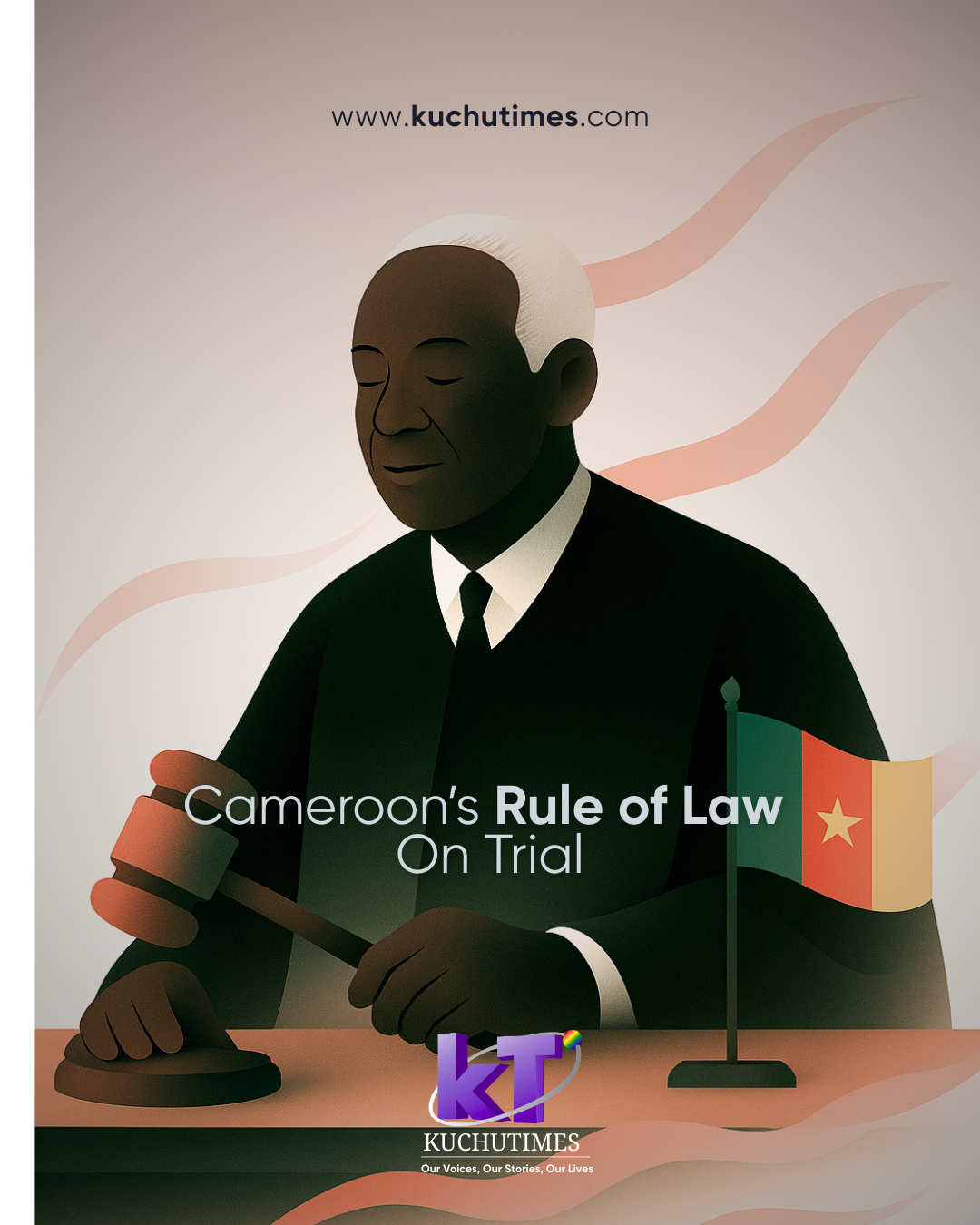
Four young Muslim men in northern Cameroon have spent six months in detention without trial after being accused of watching gay-themed films, a case that has drawn widespread condemnation from human rights defenders across Africa.
The men, identified by pseudonyms Sabir (24), Dom (23), Yabby (25), and Sol (23), were arrested in February following a complaint from their mosque’s imam, reportedly based solely on suspicions voiced by other community members. No physical evidence has been presented, and their prolonged imprisonment has intensified concerns over due process violations.
Cameroon’s legal framework criminalises same-sex relations under Article 347-1 of its Penal Code, prescribing penalties of up to five years in prison and fines ranging from 20,000 to 200,000 CFA francs (US $35–$350). Reports indicate that authorities have proposed releasing the four men if they each pay 250,000 CFA francs (US $436), a sum exceeding the legal maximum fine. In addition to criminalising same-sex relations, Cameroon’s laws also prohibit media content deemed to “propagate homosexuality,” meaning that even private viewing of LGBTQ-themed films can be treated as a criminal offense.
The case has struck a chord beyond Cameroon’s borders, particularly in Uganda, where the 2023 Anti-Homosexuality Act imposes severe penalties for same-sex relations and any perceived “promotion” of homosexuality. Both countries have seen religious authority and state power intersect in ways that enable arbitrary arrests, fuel stigma, and curtail basic freedoms.
Cameroonian human rights lawyer Alice Nkom, renowned for her defense of those prosecuted under anti-gay laws, has called for the charges to be dropped and for the immediate release of the four men. She warns that this case reflects systemic misuse of legal and religious authority to target vulnerable groups. Regional activists argue that such prosecutions are part of a broader trend across Africa, where criminalisation of same-sex relations erodes fundamental rights and underscores the urgent need for coordinated advocacy and solidarity across borders.