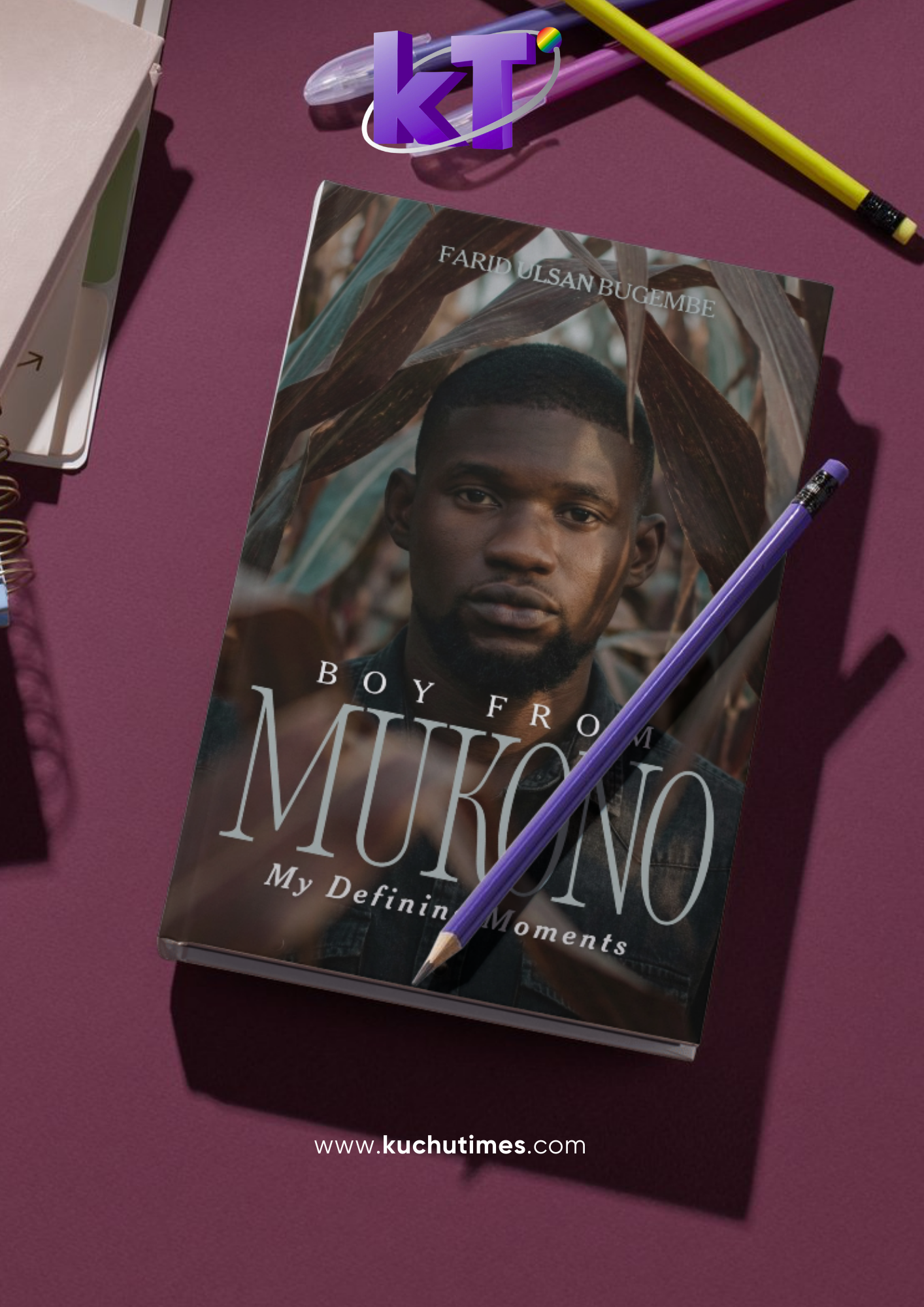
Book Review: Boy From Mukono: My Defining Moments by Farid Ulsan Bugembe
This memoir, set against the red soil and unrelenting heat of Uganda, is an honest account of what it costs to be queer and alive in a country that would rather you were neither. It is not a comfortable read. It is not meant to be. But it is a necessary one.
Faith as a Weapon
One of the book’s most quietly devastating threads is its portrayal of religion — not as a source of comfort, but as a mechanism of control. The author moves through a spiritual landscape where institutions that claim to offer refuge reveal themselves, in time, to be systems designed to extract compliance. Attendance is compelled. Identity is suppressed. The language of God is borrowed and used to justify humiliation.
What makes this so painful is the specificity of the betrayal. These are not distant institutions. They are intimate spaces — small rooms, shared homes, Sunday mornings — where people in crisis have arrived hoping for something genuine. What they encounter instead is conditional love wielded as leverage. The reader is left sitting with a quiet, heavy anger that the author himself seems to have taken years to name: that spiritual abuse is still abuse, even when the abuser is holding a Bible.
The State as Threat
Running beneath every chapter is a current of fear so constant it almost becomes background noise. Almost. The author never lets it fade entirely, and that is the point.
To be queer in Uganda is to exist in permanent negotiation with danger. The police are not protectors here — they are predators in uniform. Safe spaces are raided. Joy is criminalized. Freedom, when it comes at all, is purchased in the dark, in whispers, in the middle of the night when phones are passed around and desperate calls are made to people who might, if luck holds, have enough money to buy your way out of a cell.
The book does not sensationalize this. It simply tells you what happened. And somehow that restraint makes it worse. Because you understand, reading it, that this is not a series of unfortunate events. It is the system working exactly as intended — punishing people for existing, for dancing, for daring to take up space.
The Beauty of Chosen Brotherhood
And yet. And yet.
Alongside the fear, the betrayal, the grief — there is love. Real, chosen, hard-won love.
The friendships documented in this book are unlike anything most readers will have encountered in their own lives, and that is the point. When your family may reject you, when your church may betray you, when the street itself may turn violent, the people you build around yourself become everything. These bonds are not casual. They are survival structures. They are forged in shared poverty, in hospital rooms, in the back of motorcycle taxis at three in the morning, in the kind of laughter that only exists between people who have genuinely seen each other at their worst.
The author writes about friendship with a tenderness that never tips into sentimentality. These relationships are flawed, complicated, and sometimes broken. People betray each other. Pride gets in the way. Silence does damage that words never quite repair. But the people who stay — and some do stay — carry a weight of loyalty that is almost impossible to describe and impossible to forget once encountered.
Growing Up Without a Map
What the book captures so well is the particular loneliness of growing up queer in a community that has no language for what you are — or worse, has language but uses it only as a slur.
Coming of age means navigating crushes and heartbreak, identity and self-worth, all the ordinary turbulence of youth — but doing it in secret, without guidance, without the comfort of seeing yourself reflected anywhere. When your first honest moment of self-expression results in public humiliation, you learn quickly that honesty is a luxury. You learn to read rooms. You learn to be invisible. You learn, at a cost no child should have to pay, that the world’s acceptance of you is not guaranteed.
The author does not write about this with bitterness, though he would be entitled to. He writes about it with the kind of clarity that only comes after a long time spent making peace with something painful. The result is not a wound on display. It is a document of resilience — quiet, particular, and deeply human.
Why This Book Matters
Boy From Mukono will not fix anything. It is not a policy document or a manifesto. It is something more fragile and more durable than that: a testimony. A record of what it costs to be visible in a world that profits from your invisibility.
For queer readers in Uganda and across the continent, this book may be one of the first times they have seen their lives rendered in print without shame or apology. That is not a small thing. That is, for many people, the thing.
For everyone else, the invitation is simply this: read it. Let the discomfort be informative. Let the joy be infectious. Let the grief land where it needs to land.
The boy from Mukono survived. He wrote it all down. The least we can do is bear witness.
“Survival, while necessary, is only the beginning. We deserve to thrive.”