Some books we read merely to pass time, just as we read newspapers, quickly and inattentively. Others we read for purgation: to loosen the grip of self-imposed prisons. Indubitably, many of us are prisoners: societal prisoners, family prisoners, mythical prisoners. Or yet, someone out there, out of hatred for our identity, has enslaved us, and we have accepted the chains as ordinary.
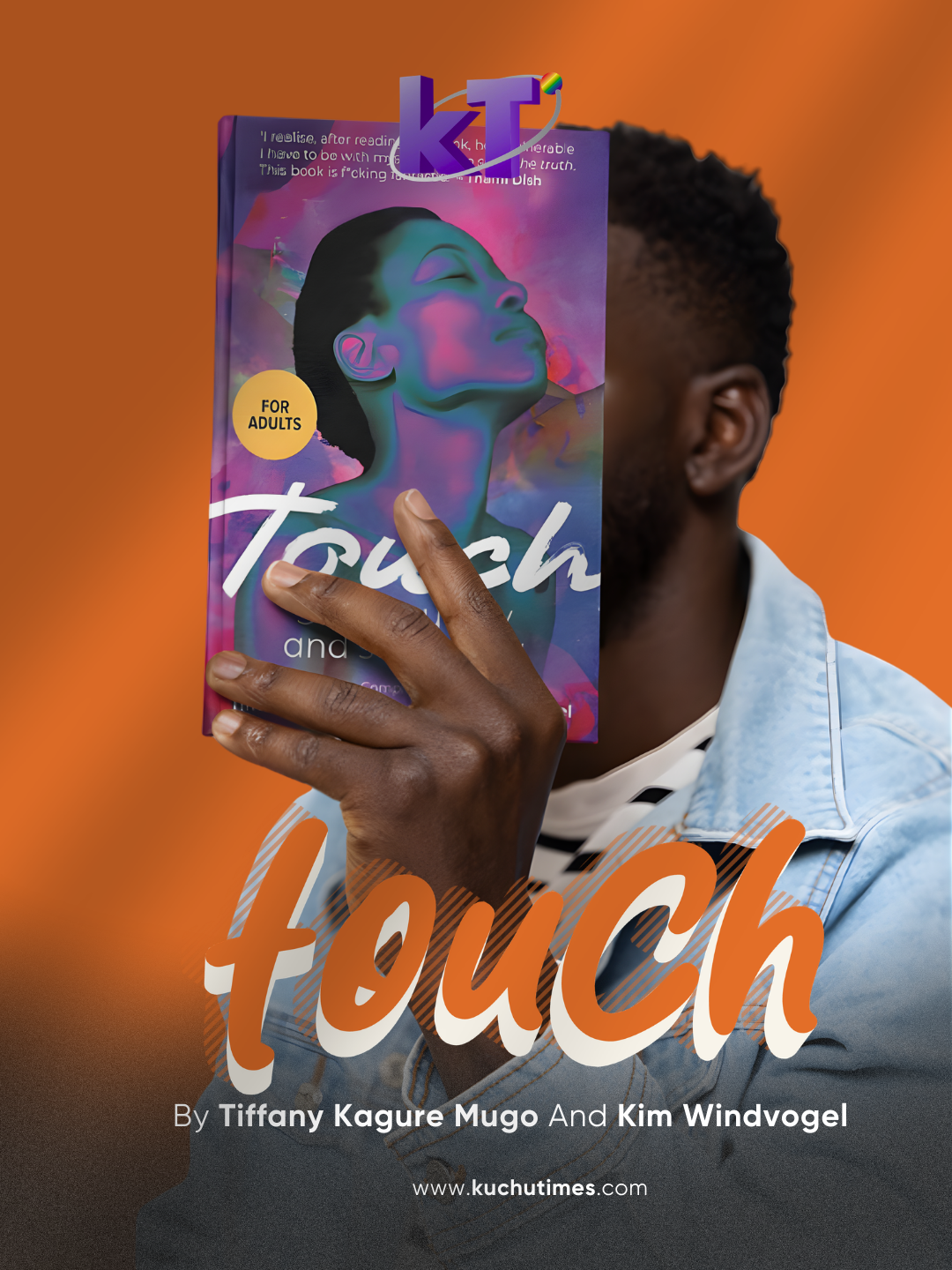
Touch: Sex, Sexuality, and Sensuality belongs to the second kind of books. It is catharsis. It is a release. It is a text upon which one reads while nodding in excitement, in pain, and in reluctant acceptance that sex, in its entirety, ought to be a free subject. The book lays bare what society has long labelled taboo and then pretended not to practice. From its opening pages, the editors remind us that “sex is much more than that… It’s about our insecurities, our desires, our bodies, our depression, our upbringing, religion…” In this framing, sex is not an act alone; it is a condition of being.
In contemporary Africa, sex and sexuality remain vehemently sacred, so sacred that those who dare to speak about them honestly are thought mad, immoral, or corrupted. Yet how can we continue to live without speaking of our bodies and pleasures? How long can we survive on silence? Touch argues, without apology, that there should be no secrecy around sexual pleasures and bodies, around our sexual madness and our imperfections. These are not shameful confessions; they are narratives that matter.
Touch was compiled by Tiffany Kagure Mugo and Kim Windvogel during the isolation of COVID-19 and published in 2021. It is a gay story collection rooted largely in South Africa, yet unmistakably familiar to queer Africans elsewhere. It speaks in what might be called the language of sex, a language learnt in secrecy, shaped by fear, improvisation, and longing. One contributor captures this tension precisely: “Sex can confuse us, please us, and allow us to explore. It can cage us, drive us, or be something to fear” (Enter the lair, if you dare). Here, sex is neither romanticised nor condemned; it is simply told as it is lived.
Beyond sex, Touch confronts trauma, which, in one form or another, many of us wrestle with. Trauma from childhood homes where patriarchal fathers beat mothers as though they were clay. Trauma from uncles who touched us inappropriately, while families chose denial because blood was assumed pure. Trauma from stepfathers who suppressed us and from mothers who, out of love or fear, learnt to ignore our stories. The book understands that intimacy does not emerge in a vacuum. As Jamil F. Khan writes with devastating clarity, “In the absence of power, I was always rapable, maimable, and killable” (Femmes wanna fuck too). This is not exaggeration; it is structure.
Yet Touch is not content with exposing harm alone. It also makes space for agency; sometimes quiet, sometimes delayed, but no less real. It recognises that freedom does not always arrive as pleasure; sometimes it arrives as refusal. Khan notes, “The first time I stopped sex due to discomfort riddled me with guilt, but it felt wonderful to own my body” (Femmes wanna fuck too). In such moments, the body is reclaimed not through excess, but through boundary.
The anthology also interrogates race and desire with honesty. In Nakhane’s contribution, the Black queer body is revealed as a site of doubt and discipline: “The flesh that makes you and confirms your existence is wrong” (Dangerous Bond). Yet even here, the writing gestures toward awareness rather than resolution. “Something new is starting to happen. Clarity is emerging”. Healing, if it comes, comes slowly, without spectacle.
Borrowing Tiff and Kim’s words once more, sex is not merely “busting a nut.” It is our insecurities, our desires, our bodies, our depression, our upbringing, our religion, everything we carry into intimacy, whether we wish to or not. And in agreement with them, and as a lover of the psychoanalytic thought of Sigmund Freud, it is impossible to exclude the dark past from our lives; it resurfaces, often subconsciously, shaping desire and fear alike. This is precisely why Touch gives queer writers room to express themselves and paint their minds without regulation, without sanitisation, and without the burden of respectability.
Ultimately, Touch: Sex, Sexuality, and Sensuality is not merely a collection of sex stories. It is an archive of queer African becoming. It does not promise comfort. It offers something rarer: release. And for those long held captive by silence, that release is everything.