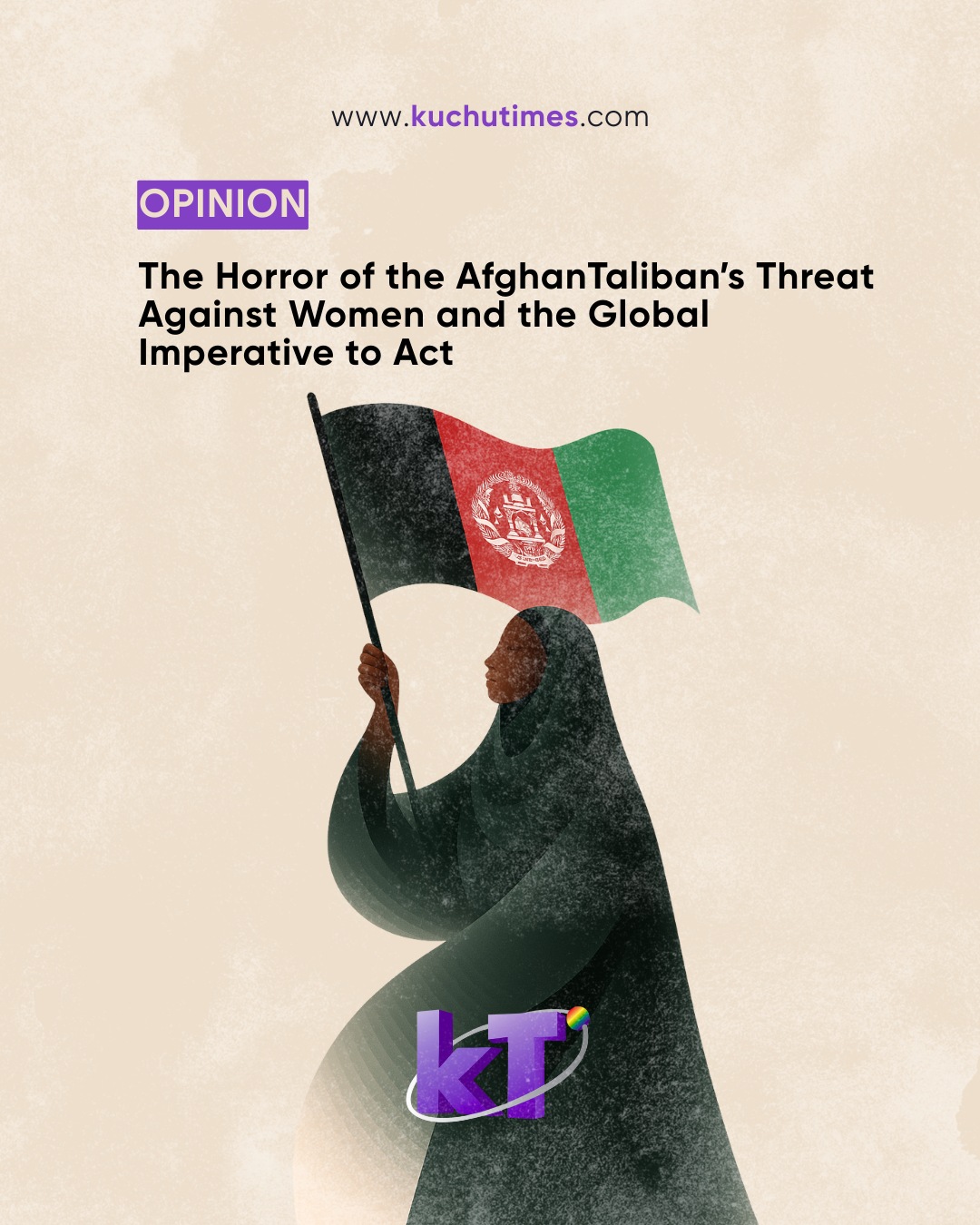
Nothing articulates the vilest threat to human dignity quite like a settled government broadcasting the return of primitive, medieval-style justice, with women once again facing death by stoning. Reports from early 2024 reveal that Taliban Supreme Leader Hibatullah Akhundzada explicitly announced the re introduction of public stoning—alongside flogging—for women accused of adultery. Statements including “We will stone them to death in public” spotlight the regime’s brazen intent to terrorise women—and through them, entire communities.
A Revival of Barbarity Under the Guise of “Sharia”
This is not a sanitised legal reform or misinterpretation—it is a deliberate policy of dehumanisation. Stoning is among the most brutal forms of capital punishment: victims are buried, often up to their waist or chest, and stoned until they die. The Taliban’s intent isn’t bound by Islamic jurisprudence’s historically stringent evidentiary standards; instead, it relies on fear, intimidation, and public spectacle to suppress dissent and enforce control.
Even Islamic legal traditions reserve stoning only for specific, rigorously proven cases—thus, its revival at the hands of the Taliban is less a return to orthodoxy and more a descent into tyranny. The majority of global Muslim scholars either oppose the practice or circumscribe it severely, considering it incompatible with fundamental justice principles.
Gender Apartheid: Not a Relic, But a Reality
This is not bound by cultural relativism—it is gender apartheid in action. Since taking power in 2021, the Taliban have systematically eradicated women’s autonomy: from barring girls from secondary school and universities to banning them from parks, beauty salons, and even speaking or singing in public. International human rights organisations have rightly characterised this regime as enforcing “gender apartheid,” codifying the segregation, suppression, and invisibility of half the population.
What Does This Mean for the World—and for Us?
- Global Complacency Is a Compromise with Brutality
When the international community allows diplomatic normalisation without conditions, it sends a signal: barbarism carries no real cost. This emboldens regimes like the Taliban. The ICC’s recent move to request arrest warrants for Akhundzada and others underscores that accountability cannot wait any longer.
- Afghan Women Are Far from Voiceless
Brave women continue to resist; from secret school networks teaching thousands of girls, to diaspora activists gathering documentation of systemic persecution. Their courage is a beacon, highlighting that moral rights and human dignity endure even when laws are twisted.
- A Call for Real Action
- Legal and diplomatic pressure: Support warrants and prosecutions at the ICC. Deny legitimacy to any regime that continues such atrocities.
- Conditional engagement: International aid must prioritise women-led programmes and institutions, not the Taliban authorities.
- Amplifying stories: Journalism, art, and policy must bring these women’s voices—real human faces—into global consciousness, resisting the silence the Taliban impose.
Bottom Line
We are not at the fringes of history. We’re at a crossroad. This is not an abstract debate over religious authenticity; this is about whether we stand for cruelty, or against it. Stoning women to death is not a revival of tradition; it is a modern act of oppression, backward not because it evokes the past, but because it perverts the present.
The world must not avert its eyes.