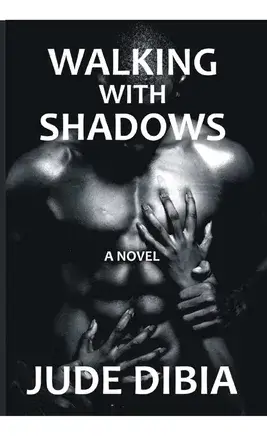
When Jude Dibia published Walking With Shadows in 2005, he did something extraordinary: he told the story of a gay Nigerian man as a human being, not a cautionary tale. For West African literature — and for queer readers — it was a rupture, a revelation, and, ultimately, a spark that still burns today.
A Radical Beginning
At a time when homosexuality was barely acknowledged publicly in Nigeria, Dibia’s decision to center his novel on Ebele “Adrian” Njoku — a husband and father forced to confront his hidden sexuality — felt almost impossible. Publishers balked at the manuscript. Some suggested that Adrian should renounce his sexuality, or even die at the end of the book. Dibia refused.
By refusing to punish his protagonist for being gay, he broke a taboo entrenched not only in society but in the expectations of African literature itself.
Resistance and Risk
Publication brought visibility — and backlash. Dibia faced hostility, social isolation, and professional exclusion. In the wake of Nigeria’s 2014 Same-Sex Marriage Prohibition Act, which intensified dangers for LGBTQ+ people, he eventually relocated to Sweden for safety.
Yet the novel was out in the world, and for many readers it was transformative. As activist Bisi Alimi recalls: “Prior to that day, I had never really read any book as personal and relatable as that. Jude and the book did something to me.”
Opening Doors for Others
Walking With Shadows didn’t just mark a literary first — it cleared a path. Writers who followed could name queerness in ways once thought impossible.
- Chinelo Okparanta’s Under the Udala Trees(2015) brought lesbian love into the Nigerian canon.
- Romeo Oriogun’s poetry collection Burnt Men(2016) voiced queer longing with defiance.
- Chike Frankie Edozien’s memoir Lives of Great Men(2017) celebrated gay African identities without apology.
- Unoma Azuah’s Embracing My Shadows(2020) traced her journey growing up as a lesbian in Nigeria.
All, in different ways, extended what Dibia had begun. Edozien himself calls Walking With Shadows “a guiding light” — proof that queer storytelling in Africa is not imported but rooted in lived realities.
A Roadmap for the Future
Nearly two decades on, the novel remains a touchstone. Writers like Ayodele Olofintuade have described it as “a roadmap of what is possible,” a book that made queer literature visible as a legitimate genre in Nigeria.
Readers, too, continue to find themselves in Adrian’s struggles — the secrecy, the shame, but also the dignity of being named. In societies where queerness is still criminalized, that act of recognition carries profound power.
The Legacy of Courage
The significance of Walking With Shadows lies not only in its content but in the courage it demanded. Dibia risked his career, friendships, and safety to write it. In doing so, he cracked open a space for honesty in West African literature — one that continues to grow.
The novel’s endurance reminds us that storytelling can be both survival and defiance. It shows that silence can be broken, and that once a story is told, it cannot be untold.
Looking Ahead
As more queer African writers claim their space, Dibia’s novel is both anchor and compass. It belongs to history as the first of its kind, but also to the future as a reminder that literature can dismantle erasure, one voice at a time.
Conclusion:
Walking With Shadows is not just a novel. It is an act of resistance, a testament of visibility, and a literary cornerstone. Twenty years on, it continues to challenge, to inspire, and to remind West Africa — and the world — that queer lives are not shadows at all.

Leave a Reply