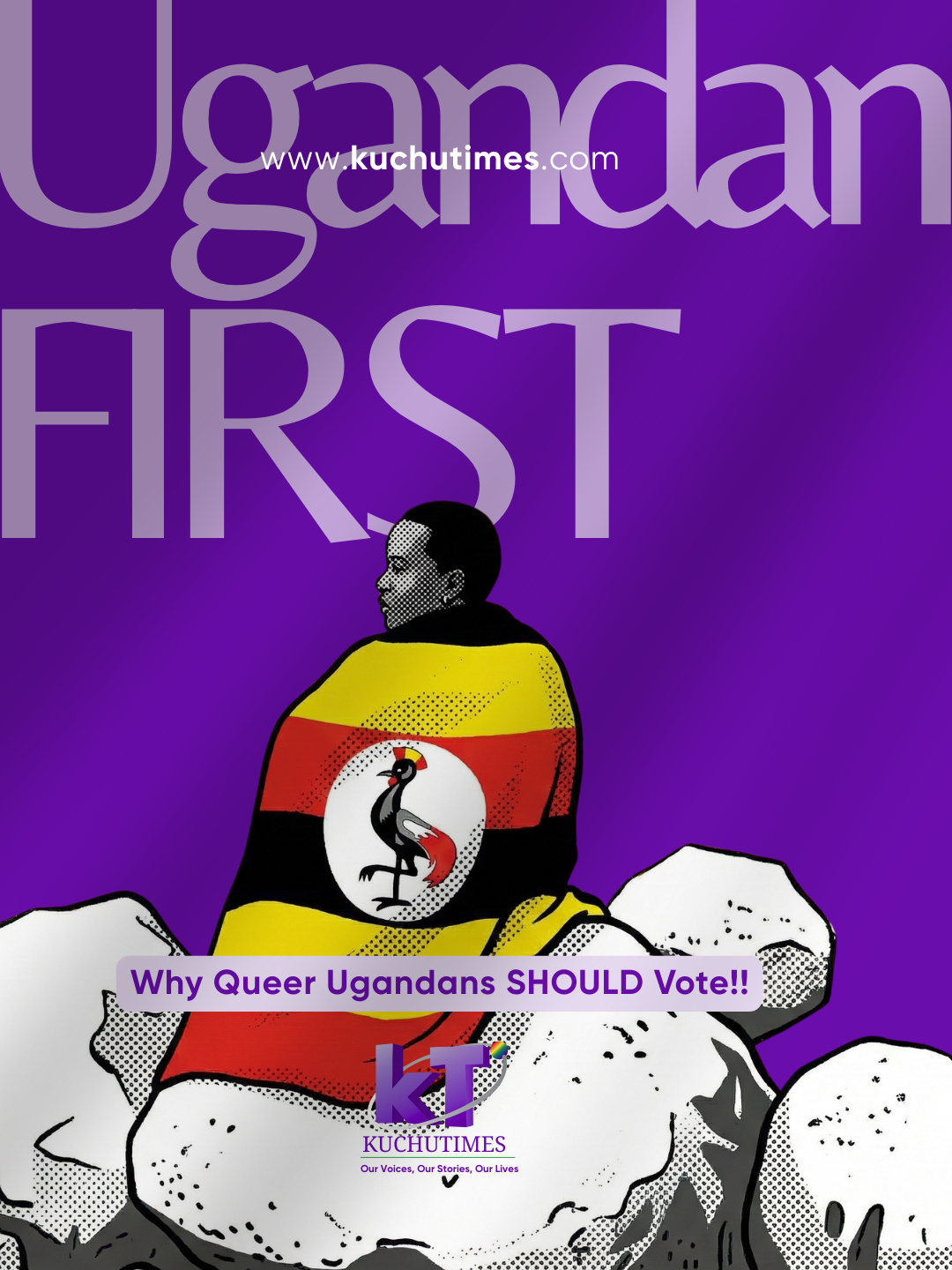
This Thursday, Uganda goes to the polls. Streets fill with posters, rallies buzz with promises, and the weight of choice hangs in the air. Elections are often framed as moments of division, but they are also moments of collective ownership. They ask us a simple question: what kind of country do we want to live in, and who gets to decide that?
For queer Ugandans, that question is often complicated by fear, exclusion, and deliberate erasure. Our existence is debated loudly, sometimes violently. Our citizenship is questioned. Yet elections return us to an undeniable truth: before anything else, we are Ugandan.
Before queer, we are Ugandan.
Before lesbian, gay, bisexual, trans, intersex, or nonconforming—we are Ugandan.
Before activist, student, artist, parent, or worker—we are Ugandan.
Our identities are layered, not separate. Every label we carry is preceded by the word Ugandan. Ugandan woman. Ugandan man. Short Ugandan. Tall Ugandan. Ugandan doctor. Ugandan market vendor. Gay Ugandan. Trans Ugandan. None of these identities cancels the other. Together, they tell a fuller story of who we are and why this country belongs to us too. Voting is one of the clearest ways we claim that belonging.
This election is not only about the presidency. While national leadership matters, power in Uganda is deeply local. Decisions that affect our safety, our livelihoods, and our daily dignity are often made far from State House—by Members of Parliament, district officials, councillors, and especially at the very first office of governance: the LC1.
The LC1 chairperson is the face of the state in our neighborhoods. They mediate conflicts, influence policing, and set the tone for how “difference” is treated at community level. For queer Ugandans, an LC1 can be an ally who de-escalates violence—or a threat who fuels it. That is why voting at every level matters. That is why showing up for local leadership is not optional; it is survival, strategy, and solidarity.
Voting is also about building allies. Not every leader who protects queer lives will be queer themselves. Progress often comes through relationships, through leaders who believe in fairness, dignity, and justice even when it is unpopular. When we vote thoughtfully, we invest in people who can stand with us, speak for us, or at the very least refuse to harm us. Allies are built at the ballot, not just in boardrooms and protests.
Civic duty is not something we earn by being accepted. It is something we exercise because we belong. Even when the system feels hostile, participation is a form of resistance. Voting says: we refuse to disappear. It says: we will not surrender our voice, even when others try to silence it.
This week, if you are able, please vote. Vote with intention. Vote beyond one name. Vote in local elections, in parliamentary races, in every space where power is being decided. Talk to your neighbors. Encourage your friends. Protect each other where possible.
Because before we are queer, we are Ugandan.
And Uganda’s future should never be decided without us.